John Elliott, the author of Implosion: India's Tryst with Reality, on his Riding the Elephant blog, says the sacking of Cyrus Mistry as chairman of Tata and Sons was in line with Ratan Tata's personal style of dealing with executives
The average Indian soldier remains as hardy as before but he is certainly confused with the pace of change occurring all around him. It is here that the leaders -- the officers -- will have to adapt themselves to the new reality, says Nikhil Gokhale

Nehru decided to build The Ashok in New Delhi to host a UNESCO conference. For a prime minister focussed on India building with projects like the Bhakra-Nangal Dam, IITs and factories, "the hotel spoke of the gumption of the country at that time." Manavi Kapur traces the eventful journey of the hotel, which has now completed 60 years.

Here's your weekly digest of the craziest and funniest stories from around the world.
Enormous debt isn't the only thing afflicting Air India. Its work culture is an equal culprit in its downfall.

'General Bajwa is believed to consider the internal threats to Pakistan's security as far more serious than the bogey of the Indian threat.' 'This doesn't mean that he is soft on India, only that he is more rational and sensible than his predecessor who had a bit of a chip on his shoulder about India,' points out Pakistan expert Sushant Sareen.
The real danger in India is not majoritarianism but minorityism, a bane we have already experienced. Majoritarianism in the India context means plurality and tolerance. No one needs to fear, says Vivek Gumaste
Rajiv Chandrashekhar, Rajya Sabha MP, explains that the argument that other government servants are eligible for OROP is incorrect and the comparison is laughable.

On Monday, Colonel Rai had won the Yudh Seva medal. A day later, he fell to bullets.

'If he plays his cards well; develops a thicker political hide; complements his populist 'Left of centre' image with a sounder understanding of economics, foreign policy and national security; and plays the waiting game with fortitude, who knows, India may well have a rejuvenated Congress party with a reformer and a statesman as its leader in the years ahead.'

The government must undo the damage inflicted by the flawed policies of globalisation, and India should be converted into a country where entrepreneurs can thrive and the entire population can participate in the economy, says Arvind Kumar.
'Other countries go out on a limb to save even a single life.' 'What to talk of civilian accidents and disasters, even our military does not have a priority for Combat Search and Rescue,' says Group Captain P I Muralidharan (retd).

'The non-cinephiles may hold up Sholay as their personal favourite and the cinephile lot may quote something like 8 1/2 as the movie to load with them on the ark.' 'But for a good percentage of these people from both categories, if there is one film to simply laze around with, a film that can extract them from their dull funk, it's definitely DCH.'

Shiv Sena activists threw ink at me and smeared my face. They abused me, Kulkarni alleged.

'Prashant has left us and it is really tragic. But I want to hold on to those little moments of happiness that he shared with me and with others whose lives he touched. That is how I want to remember him.' Aseem Chhabra pays tribute to Patang director Prashant Bhargava, who passed away on May 16. He was only 42.

'Jin Jiang had invested in Louvre Hotels.' 'Louvre, a couple of months ago, took a majority in Sarovar hotels.' 'So they are coming in now.' 'Look at the Chinese -- two quarters ago they took 25 percent in Hilton.' And then HNA also took majority in Carlson (Radisson).'

'Your constant reiteration on the lack of religious freedom in India has sown doubts about the kind of information that you are being fed and based on which you seem to be making adverse references to India and its tradition of religious tolerance.'

Honesty coupled with pragmatism translates to good governance. Honesty plus hubris and self-righteousness spells disaster: that is what the AAP is, says Vivek Gumaste

'The sky is the limit for what all could be done at an air base to neutralise terrorists. Good proactive local leadership and delegated operational effort would be key to ensuring that a handful of terrorists cannot hold a whole air base, and by extension, the whole nation to ransom,' says Group Captain P I Muralidharan (retd).

'We are passing through a very historical moment. The UP election next year and the Lok Sabha election of 2019 will decide the course of India.' 'Maybe the unlettered will save India again because they have inherited a different India and a different idea of India,' says eminent social scientist Achyut Yagnik.
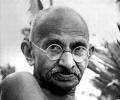
As we observe Martyrs' Day today, Mahatma Gandhi would have been dismayed by the number of vested interests that are seeking to carve out identities and spaces outside the Republic of India, says Shreekant Sambrani.

'The thin line is a permanent dilemma with soldiers. You have to appreciate that in that dilemma and chaos there are officers who stand and lead their men.
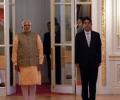
Narendra Modi and his government should look at the emerging geo-politics realistically and not get sucked into having to make a choice between China and Japan. India has enough economic space for both, says Mohan Guruswamy.

The Congress on Thursday dismissed Narendra Modi's attack on Prime Minister Manmohan Singh reminding him that the country has over two-and-a-half a dozen chief ministers and rejected as "tall talk" his challenge to Singh for a public debate on pressing issues.

Make modern meals from ancient grains.

'Perhaps the finest example is from the current avalanche itself.' 'The Commanding Officer of 19 Madras (the affected unit) is Colonel Um Bahadur Gurung, a Gurkha who joined the Madras Regiment.' 'He inspired this recovery operation at 19,500 feet, a unique feat by itself.' 'He knew that if it was delayed the chances of finding the mortal remains in the Saltoro's ice would be impossible.' 'He did not pass orders from his base at Kumar (15,000 feet) or gave directions; he simply went there himself, inspiring the multitude that followed.' Lieutenant General Syed Ata Hasnain (retd), who has served on the Siachen Glacier, salutes the incomparable spirit of the Indian Army.
